Primobolan on TRT: The Case Is Stronger Than the Evidence
Anecdotal bloodwork often shows estradiol falling after Primo. That may be a real signal, but calling methenolone a clean aromatase inhibitor goes further than the evidence.
The short answer: the hypothesis is plausible, the proof is missing
Primobolan, the brand name most readers use for methenolone, has an unusually persistent reputation as the “clean” anabolic. It does not aromatize into estradiol, it is not known for the same progestogenic activity as nandrolone, and its injectable form avoids the first-pass exposure associated with many oral anabolic steroids. Those are legitimate pharmacological reasons to study it as a possible addition to testosterone replacement therapy.
They are not the same thing as evidence that Primobolan improves a man’s TRT outcomes, lowers estradiol predictably, or is safer than every alternative. There is no modern randomized trial establishing a testosterone-plus-methenolone strategy, no head-to-head trial against anastrozole, nandrolone or oxandrolone, and no long-term safety dataset that answers the question clinics and users are already asking.
My position: Primobolan deserves formal pharmacology and clinical research as a TRT-plus hypothesis. It does not yet deserve to be marketed as a proven aromatase-inhibitor substitute or a universally safer steroid.
This is deliberately an opinion piece. It is less settled than a conventional study summary, and it should not be read as a dosing guide, a treatment recommendation, or a reason to change prescribed therapy without a clinician.
Start with the observation, not the conclusion
Many steroid users report that adding Primobolan is followed by a lower estradiol result, less water retention, fewer estrogen-related symptoms or a need for less anastrozole. It would be a mistake to dismiss every one of those reports as imaginary. Repeated real-world observations can identify a useful research question.
It would be an equal mistake to jump from “my E2 fell after Primo” to “Primo is an aromatase inhibitor.” The result can be influenced by changes in testosterone dose, injection timing, body-fat percentage, calorie intake, alcohol use, assay method, laboratory timing and the amount of endogenous testosterone still being produced. A user may also replace part of a testosterone dose with methenolone rather than simply adding it, which changes the amount of aromatizable substrate.
There is another terminology problem. Methenolone is a DHT-derived steroid, but it is not DHT itself. Taking it does not automatically mean that a blood test will show a predictable rise in circulating DHT. The more accurate phrase is DHT-like androgen-receptor signaling, not “Primobolan raises DHT, therefore it is an AI.”
The practical comparison in this article is also the same TRT-plus conversation that arises when some clinics discuss Nandrolone (Deca/NPP) or Oxandrolone (Anavar) as off-label anabolic add-ons. That usually means a defined, monitored period with follow-up and reassessment—not a claim that any of these compounds belongs in indefinite or lifelong TRT. Clinic practice varies, and this framing is not an approval or safety endorsement.
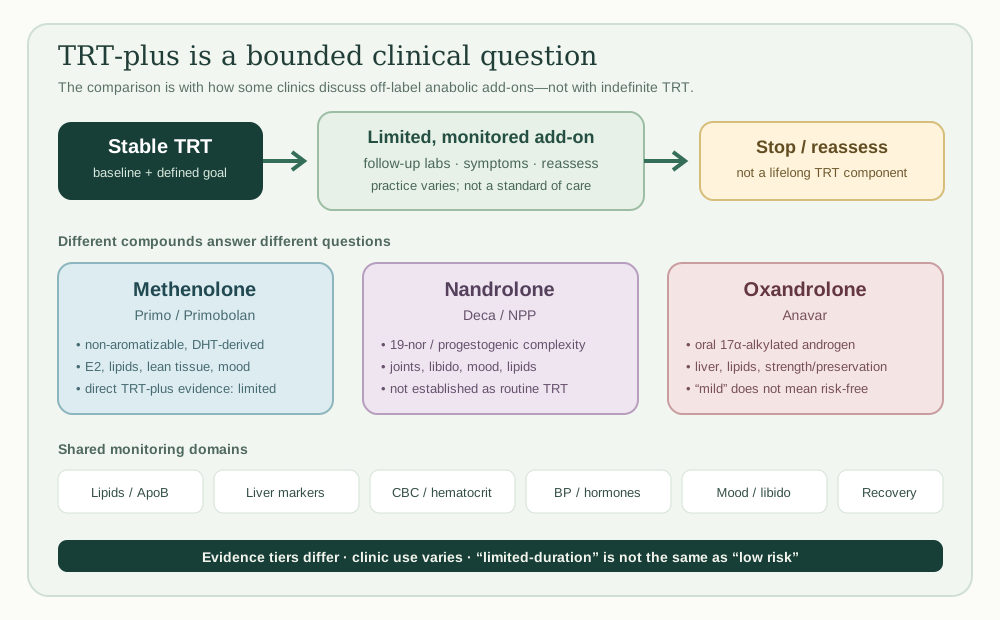
Original PED Evidence schematic. “TRT-plus” describes a clinical discussion frame; it is not a treatment algorithm, dosing guide or statement that these uses are approved.
The anecdotal signal is too consistent to ignore
This is where the formal literature and lived experience separate. Across large-audience bodybuilding Q&As, public bloodwork discussions and long-running forum conversations, Primo, estradiol and bloodwork repeatedly come up together. The practical question is the one people actually bring to a TRT clinic or a forum: whether adding methenolone changes measured E2, water retention, lipids, SHBG, libido or the perceived need for an aromatase inhibitor. The broader conversation also treats Primo as a distinct drug with its own “feel,” trade-offs and place relative to Masteron, not simply as a generic mild steroid. These are informed community perspectives, not clinical trials, but they are claim-specific and directly connected to the hypothesis this article is evaluating. [12][13][14][15]
Their value is partly that they describe outcomes a short laboratory study might not think to capture: whether a person feels less puffy, whether joints feel drier, whether libido changes, whether sleep becomes worse, whether hair shedding accelerates, and whether a blood result matches the subjective experience. In a research area with little modern funding, long-term users can function as an early-warning system. They can notice a recurring pattern years before a sponsor decides that the question is worth a controlled trial.
What the forum record actually sounds like
Across discussion clusters on Steroid Source Talk and Meso-Rx, the themes are repetitive but the direction is not. One group of posts describes less water retention, lower E2 readings, a tighter appearance or a generally “cleaner” feeling after adding Primo. Another group describes what sounds like the cost of pushing the same effect too far: fatigue, anxiety, insomnia, lower libido, flat mood, joint discomfort or a sense that energy has disappeared. Hair changes, injection-site pain and changes in other blood markers also appear. Some threads include repeated bloodwork, but the surrounding conditions are rarely controlled. [16][17][18][19][20][21]
The more useful threads do not all agree on the mechanism. Some contributors argue that the apparent E2 change mainly comes from lowering testosterone while replacing part of the anabolic load with a non-aromatizable androgen. Others discuss a possible metabolite or tissue-level effect, while still warning that individual responses vary and that an AI-like feeling can coexist with an unhelpful blood result. The point is not to select the post that supports the article. It is that these forums contain a recognizable cluster of real-world observations, disagreements and follow-up labs that are more informative than a single dramatic testimonial, while still falling far short of controlled evidence. [16][19][20]
Why anecdotes may be ahead of the literature—and why that still is not proof
It is fair to say that experienced users may be ahead of the published literature in identifying the real-world question. The literature has not adequately tested the scenario people keep describing: stable TRT, methenolone added or substituted, sensitive estradiol testing, repeated measurements and outcomes that include both body composition and how the person feels. That gap is not evidence that the anecdotes are wrong. It is evidence that the exact question has not been measured well.
At the same time, forum consensus is not a substitute for a denominator. Discussion boards over-represent people motivated to post, people with unusually good or unusually bad experiences, and people who can tolerate the time and expense of repeated bloodwork. Dose, injection timing, concurrent growth hormone, hCG, anastrozole or other drugs, calorie intake, alcohol, sleep, body-fat changes, assay quality and counterfeit or underdosed product all blur the signal. Even a sincere report can be internally accurate and still fail to predict what will happen to the next person.
How I would weight this evidence: one anecdote is a signal; a cluster of similar anecdotes is a research question; neither is a treatment recommendation. These reports can tell investigators what to measure—E2, DHT, SHBG, lipids, mood, sleep, joints, hair, resting heart rate and water retention—but they cannot tell us the average effect, the safest exposure or who is most likely to respond.
That distinction matters because methenolone is exactly the type of compound for which the normal evidence pipeline may stall. It is an older, controlled anabolic steroid with little obvious commercial incentive for a modern TRT-plus program, and the population most interested in it is difficult to study ethically and regulatorily. Dismissing all user experience would therefore be a mistake. Treating forum consensus as permission to promote a protocol would be the opposite mistake. The responsible use of anecdotes is to design the trial that has not yet been done.
So I would not write that bodybuilders have “proven” an aromatase-inhibitor effect. I would write that they have surfaced a recurring, testable observation: some people report lower measured E2 and an AI-like subjective experience after adding methenolone, while others report the familiar consequences of going too far in that direction. The gap is not simply that science disagrees with bodybuilders. It is that science has not yet measured the TRT-plus scenario bodybuilders keep describing.
What the Primobolan studies actually show
Yes—there are direct human methenolone studies, and they deserve more attention than the usual “there are no studies” shorthand. The important qualification is that the studies are old, short, and aimed at very different questions: liver-function testing, coagulation, cirrhosis, refractory anemia or the lipid effects of mixed anabolic-steroid use. None is a modern, randomized TRT-plus-Primobolan trial with stable testosterone, sensitive estradiol, ApoB, hematocrit, blood pressure and patient-reported outcomes measured together.
That does not make the older record useless. It gives us a real human signal to work with. It also shows why “Primobolan is liver-safe,” “Primobolan fixes E2,” or “Primobolan is neutral on cholesterol” are all too confident. The markers that moved depended on the formulation, the dose, the population and what the investigators were actually looking for.
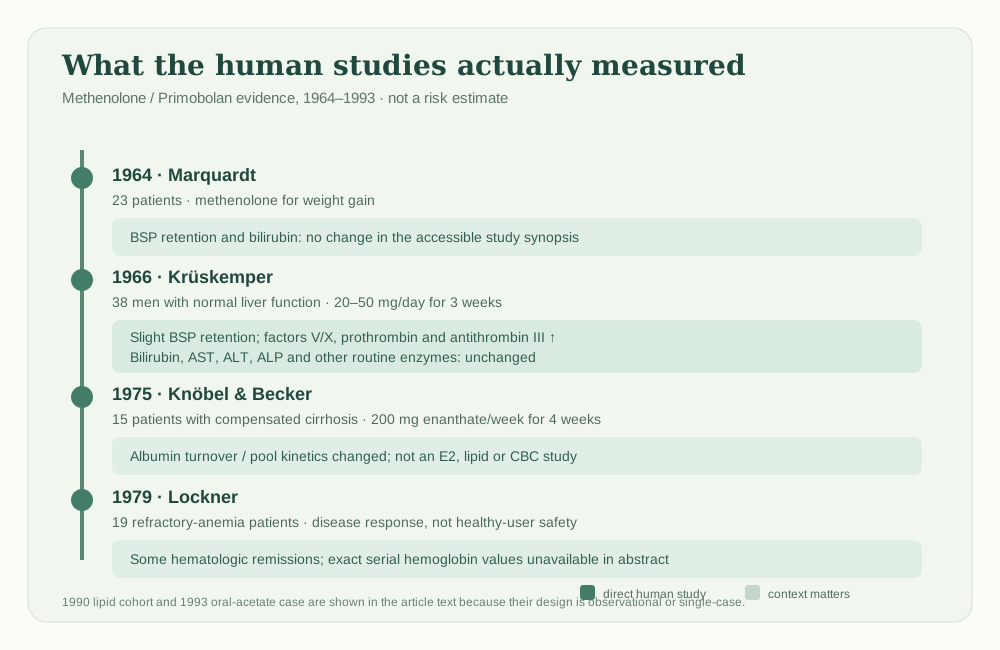
Original PED Evidence figure. Study populations, formulations and endpoints are not interchangeable.
The clearest controlled bloodwork study: liver excretion and coagulation
Krüskemper and colleagues studied 38 men with normal liver function. Participants received 1-methyl-1-androstenolone (the active methenolone compound) or its 17β-acetate at 20–50 mg daily for three weeks. The investigators saw a slight increase in bromsulphalein (BSP) retention, plus increases in coagulation factors V and X, prothrombin and progressive antithrombin III. Serum bilirubin, AST/GOT, ALT/GPT, alkaline phosphatase, aldolase, sorbitol dehydrogenase, factor VII and thrombin time did not change. [23]
That pattern is more nuanced than a routine “liver enzymes normal” screenshot. BSP was an older excretory-function test, so the authors interpreted the result as a mild disturbance of hepatic excretion—a biochemical microcholestasis—even though the usual serum enzymes stayed unchanged. It does not prove clinically important liver injury at every dose or with injectable enanthate. It does establish that normal AST and ALT do not capture every possible hepatic effect of methenolone, and that coagulation markers can move independently of transaminases.
A second liver-function cohort found little change
Marquardt and colleagues prospectively followed 23 patients given methenolone for weight gain and reported no change in BSP retention or serum bilirubin in the accessible study synopsis. [24] That is useful counterweight to the Krüskemper result: two older human datasets do not point to a single dramatic enzyme signature. The fair reading is not “the liver is unaffected,” but “routine liver tests and excretory markers may be normal in some cohorts, while subtle or formulation-specific effects can still appear.” The study also predates modern hepatobiliary imaging, contemporary assays and the TRT-plus question.
What the injectable enanthate studies actually measured
Knöbel and Becker treated 15 people with well-compensated cirrhosis with 200 mg of methenolone enanthate (Depot-Primobolan) per week for four weeks. They measured the intravascular and extravascular albumin pools and daily albumin turnover using radiolabeled albumin. The intervention changed albumin kinetics—an anabolic signal that was more pronounced when baseline turnover was lower—but this was not a lipid, estradiol, hematocrit or blood-pressure study, and the participants had cirrhosis rather than uncomplicated hypogonadism. [25]
Lockner’s 1979 clinical trial used methenolone in 19 patients with refractory anemia. Remission occurred in some patients across several anemia subtypes, and the abstract describes side effects as negligible. The endpoint was hematologic disease response, not a healthy-user safety panel, and the abstract does not provide the serial hemoglobin values needed to turn it into a modern dose-response chart. [26] A later myelofibrosis series found responses to a mixture of anabolic steroids, but because the drugs were not isolated it should not be presented as proof of a methenolone-specific effect.
The lipid study people often mean—but it was not a Primo-only trial
Baldo-Enzi and colleagues studied 14 male bodybuilders who self-administered anabolic steroids for two to three months; ten were assessed both during use and about three months after stopping. During use, total cholesterol fell slightly, but HDL2 and HDL3 cholesterol fell markedly, the HDL2/HDL3 ratio fell, and a larger fraction of cholesterol was carried by LDL. Apo A-I fell markedly, Apo A-II fell in HDL3, Apo B rose slightly and the Apo B/A-I ratio became very high. Most values moved close to normal during the off-treatment period. [27]
This is valuable human bloodwork, but it is a mixed, self-administered steroid cohort. Methenolone enanthate appears in the reported bodybuilding-world exposure, yet the design cannot isolate Primobolan from the other agents, doses, diets and training practices. The study supports a cautious statement—AAS use that includes methenolone can coincide with an adverse lipoprotein pattern that may improve after stopping—not the stronger statement that a defined TRT-plus-Primobolan dose predictably produces a particular ApoB or HDL change.
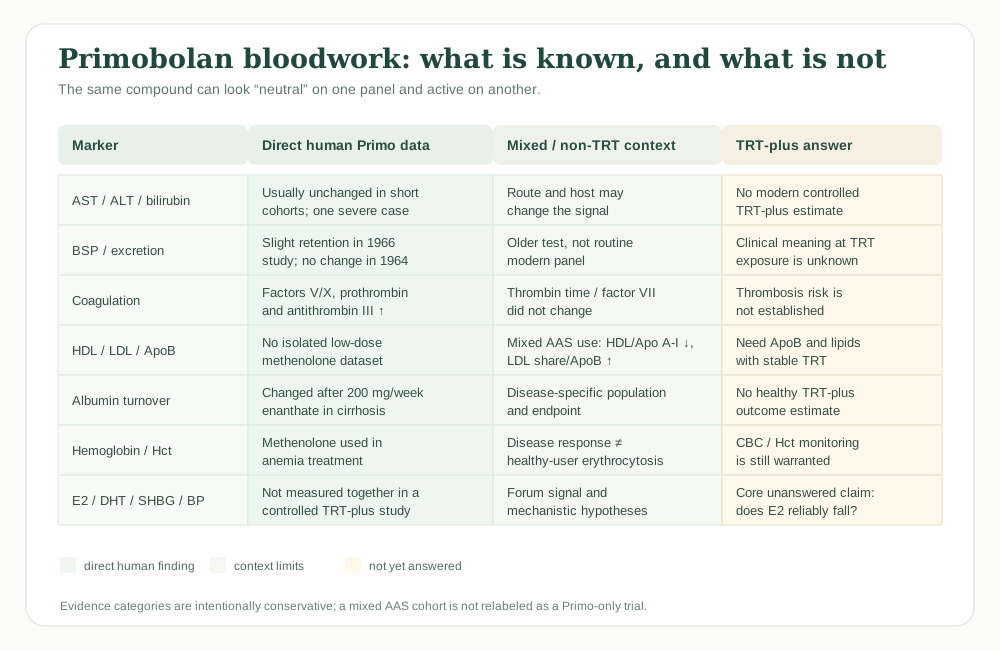
Original PED Evidence evidence map. Direction labels summarize published study observations and explicitly mark unresolved TRT-plus endpoints.
The liver-safety story includes a serious outlier
There is also a case report that should keep the word safe out of the headline. A 75-year-old man with severe aplastic anemia developed marked transaminase elevation after methenolone acetate, followed by hepatic failure and death; the authors judged drug-induced liver impairment most likely. [28] One case in a severely ill older patient cannot estimate ordinary risk, and it involved oral acetate rather than injectable enanthate. It nevertheless disproves the idea that methenolone is biologically incapable of harming the liver.
What this means for a TRT-plus blood panel
The existing studies justify monitoring, not a protocol. A clinically interpretable follow-up would keep testosterone exposure stable and measure the same markers before treatment, during steady state and after discontinuation: sensitive estradiol, total and free testosterone, DHT, SHBG, ApoB, LDL-C, HDL-C, triglycerides, CBC with hemoglobin/hematocrit, AST, ALT, alkaline phosphatase, bilirubin, blood pressure, PSA where appropriate, and symptoms such as mood, libido, sleep and edema. Contemporary AAS-monitoring guidance similarly emphasizes CBC/polycythemia, lipids, liver function and blood pressure, but that guidance is class-level and not proof of a Primo-specific effect. [30]
| Marker | What direct or near-direct human data show | What we still cannot infer for TRT-plus Primo |
|---|---|---|
| AST, ALT, bilirubin, ALP | Often unchanged in the short 1966 and 1964 cohorts; severe transaminase elevation occurred in one oral-acetate case. | A predictable injectable-enanthate risk or a “liver-neutral” guarantee. |
| BSP / hepatic excretion | Slight retention increase in the 1966 controlled study; no change in the 1964 cohort synopsis. | Whether a subtle excretory effect occurs at contemporary TRT-plus exposures. |
| Coagulation | Factors V, X, prothrombin and antithrombin III rose in the 1966 study; thrombin time and factor VII did not. | Whether this changes clinical thrombosis risk in TRT users. |
| HDL, LDL, ApoB | Mixed AAS users showed lower HDL subfractions/Apo A-I, a higher LDL share and slightly higher Apo B during use, with near-recovery off. | The isolated effect size of methenolone or the effect of a low-dose add-on. |
| Albumin turnover | Changed after 200 mg/week enanthate for four weeks in compensated cirrhosis. | Any meaningful benefit or harm in healthy men on TRT. |
| Hemoglobin / hematocrit | Methenolone was used in anemia, but those disease responses cannot be converted into a healthy-user Hct estimate. | How often TRT-plus Primo causes clinically important erythrocytosis. |
| Estradiol, DHT, SHBG, blood pressure | Not measured together in a controlled TRT-plus methenolone trial. | The core “Primo lowers E2” claim and its net clinical meaning. |
So the studies do change the argument. They make it harder to dismiss Primobolan as “just internet lore,” and they make it equally hard to call it a proven, low-risk AI substitute. The evidence supports biological activity, formulation-specific liver questions, possible adverse lipid changes in mixed AAS use and a need for better monitoring. It does not yet supply the controlled bloodwork package needed to claim that a low-dose TRT-plus strategy reliably lowers E2 while improving the overall risk-benefit balance.
DHT, aromatase and estradiol: what the pharmacology actually supports
1. The chemistry is established
Methenolone was first synthesized in 1960. The molecule is a 5-alpha steroid with a 1-methyl group and a double bond in the A-ring. Historical formulations included oral methenolone acetate and injectable methenolone enanthate. The drug was used in some countries for conditions such as marrow failure and was later adopted as a performance-enhancing drug. In the United States, methenolone and the Primobolan names appear in the DEA Schedule III anabolic-steroid listing. Scheduling is not the same thing as a current FDA-approved TRT indication. [1][2]
Because methenolone does not convert into estradiol through aromatase, it cannot add estrogen in the same direct way testosterone can. That explains why some users experience less estrogenic water retention when the testosterone-to-methenolone balance changes. It does not prove that methenolone removes estradiol already being produced from testosterone. [11]
2. The DHT mechanism is biologically plausible
In a mouse aortic-endothelial-cell experiment, increasing DHT reduced aromatase expression and reduced estradiol secretion. At the highest experimental concentration, aromatase expression fell to less than 20% of control. This is a useful mechanistic clue, and it gives the “AI-like” anecdote a scientific foothold. But it was a cell study using concentrations and tissues that cannot simply be translated to a man using methenolone alongside TRT. [5]
3. Human DHT evidence is not a clean confirmation
A randomized three-month trial of transdermal DHT in older men increased DHT and suppressed testosterone, LH and FSH. Estradiol, however, was unchanged. The trial also found no increase in lean mass, although it detected limited effects on one measure of knee-flexion strength. This is important because it prevents a tidy story in which “more DHT always means lower E2.” Human endocrine responses depend on the exposure, the tissue, the baseline hormonal state and what else is happening to testosterone production. [4]
The most defensible description is therefore an AI-like phenotype in some contexts. That phrase acknowledges the bloodwork pattern without claiming that methenolone is a predictable, selective enzyme inhibitor like anastrozole.
Why the distinction matters: estradiol is not merely a side effect. In men, estrogen contributes to bone, vascular, metabolic and sexual physiology. Lower is not automatically better, and a blood number should not be treated in isolation.[10]
The metabolite question is fascinating, but still preliminary
Methenolone is metabolized into several products, including compounds that can be detected in human urine. That tells us the molecule is not pharmacologically inert after administration, but a urine metabolite is not automatically an active tissue metabolite, and detection is not the same as proving a clinical effect.
A 2024 study used fungi to transform methenolone acetate and then tested the resulting compounds against human placental aromatase in vitro. One product showed meaningful inhibition and another showed very potent inhibition in that assay. This is exactly the kind of result that should motivate follow-up work, but it does not establish that the same products are generated in people, reach the relevant tissues, or circulate at concentrations capable of lowering estradiol. [6]
The research gap is unusually clear: investigators need human pharmacokinetic studies that measure parent methenolone, circulating metabolites, DHT, testosterone, estradiol and aromatase-related markers at the same time. Until that is done, “a metabolite explains the E2 drop” remains a hypothesis, not a finding.
Why Arimidex is not a perfect comparator
Anastrozole, commonly known by the brand name Arimidex, directly inhibits aromatase. That makes it a useful comparator for the article, but I would not describe its main problem as blood-clotting risk. In the large ATAC breast-cancer trial summarized in the FDA label, anastrozole had fewer venous thromboembolic events than tamoxifen. The better-established tradeoff is what happens when estrogen is suppressed too far or for too long.
The label reports reductions in bone mineral density, more fractures and more musculoskeletal symptoms with anastrozole than tamoxifen, along with concerns about cholesterol and ischemic cardiovascular events in some groups. Those data come primarily from postmenopausal women with breast cancer, not men on TRT, so they should not be imported uncritically. They do, however, illustrate why “just add an AI” is not a risk-free answer. [8]
Anastrozole is FDA-indicated for postmenopausal breast-cancer treatment, not routine testosterone optimization. If clinics prescribe it with TRT, that is an off-label practice decision, not proof that routine estradiol suppression improves long-term outcomes.
The interesting research question is not whether Primobolan can be marketed as “natural Arimidex.” It is whether a carefully studied, non-aromatizable androgen could sometimes alter the testosterone-estrogen balance while adding an androgen-receptor signal, without creating the bone, lipid, sexual and mood problems associated with excessive estrogen suppression. That question remains unanswered.
Deca, Anavar and what “safer” should mean
If TRT clinics or concierge practices are willing to use additional anabolic agents, it is reasonable to ask whether methenolone is a more rational candidate than nandrolone or oxandrolone. But the comparison must be made by risk domain, not with a single overall safety label.
The time horizon matters too. The relevant comparator is how some clinics frame Nandrolone (Deca/NPP) or Oxandrolone (Anavar): as an off-label adjunct considered for a limited, monitored period, with labs and a decision to stop or reassess—not as a permanent replacement for testosterone therapy. There is no universally accepted clinic standard here, and “usually not long-term” should not be confused with “low risk.”
| Question | Methenolone | Nandrolone | Oxandrolone |
|---|---|---|---|
| Direct aromatization | Not expected to form estradiol | Low direct aromatization, but endocrine effects are complex | Not expected to form estradiol |
| Progestogenic activity | Not the defining feature | Demonstrated receptor activity; clinical implications vary | Not the defining feature |
| Oral hepatic burden | Formulation-dependent; injectable avoids oral first pass | Primarily discussed as an injectable ester | 17-alpha-alkylated oral steroid with explicit liver warnings |
| Evidence for TRT-plus use | Very limited modern evidence | Not established as routine TRT optimization | Not established as routine TRT optimization |
| What cannot be claimed | Not proven to be an AI or universally safe | Not proven to cause the same psychiatric effects in everyone | “Mild” reputation does not erase liver or lipid risk |
Nandrolone
Nandrolone has a genuine mechanistic difference from methenolone. The 19-nor steroid family includes compounds with progesterone-receptor activity, and receptor-binding studies support progestogenic effects for nandrolone-related compounds. That gives a plausible explanation for why some users describe libido, erectile, motivational or mood changes on Deca. It does not justify the stronger claim that nandrolone causes a predictable “slew of mental issues” in every person. Human psychiatric evidence is heterogeneous, and symptoms are confounded by dose, testosterone exposure, sleep, withdrawal and the underlying reason for use. [7]
Oxandrolone
Oxandrolone is often described as a mild oral anabolic, but its FDA label is more sobering. It identifies the molecule as 17-alpha-methyl and warns that cholestatic hepatitis and jaundice can occur with 17-alpha-alkylated androgens. It also discusses peliosis hepatis, liver tumors, adverse lipid changes, suppression of gonadal function and changes in mood or libido. That does not make every short course dangerous, but it makes the compound a poor candidate for casual long-term use. [9]
Where methenolone might look attractive
Methenolone may be a more coherent candidate if the desired research question is: can a non-aromatizable, non-progestogenic androgen add lean-tissue support without requiring an oral 17-alpha-alkylated steroid or routine estrogen suppression? The word is might. Methenolone can still suppress spermatogenesis, alter lipids, raise hematocrit, affect blood pressure, worsen acne or hair loss, influence the prostate and impair fertility. “Cleaner” is not a safety endpoint.
What should actually be studied before anyone makes a TRT-plus claim?
The most useful next study would not be another before-and-after bloodwork post. It would be a controlled trial in men receiving stable testosterone therapy, with methenolone compared with placebo and the testosterone exposure held constant.
- Hormones: total and free testosterone, estradiol using a validated sensitive method, DHT, SHBG, LH and FSH where interpretable.
- Clinical outcomes: lean mass, strength, body fat, edema, sexual function, mood, motivation, sleep and quality of life.
- Safety: blood pressure, hematocrit, ApoB, LDL, HDL, triglycerides, liver markers, kidney markers, prostate outcomes and fertility-related measures.
- Mechanism: parent drug, metabolites, aromatase-related biology and whether E2 changes track with tissue or circulating measures.
- Durability: what happens after discontinuation, including recovery of endogenous gonadotropins and whether benefits persist.
A second line of work could compare a testosterone-plus-methenolone strategy with a testosterone-plus-anastrozole strategy, but only if the design can distinguish an anabolic body-composition effect from an estrogen-suppression effect. A simple “which made the scale move more?” comparison would answer very little.
The FDA argument should therefore be a call for investigation, not an argument from popularity. The fact that a compound is discussed in clinics, used historically or common in underground markets does not prove approval-worthiness. It does justify asking regulators and sponsors to generate better data so patients and clinicians are not forced to choose between anecdote, black-market quality and poorly studied off-label practice.
Editorial verdict: the case is stronger than the evidence
Primobolan has a scientifically coherent story. It is a DHT-derived, non-aromatizable anabolic with historical human exposure. It may offer a different balance of androgenic and estrogenic effects than testosterone alone. It may be less hepatically burdensome than an oral 17-alpha-alkylated drug such as oxandrolone, and it may avoid the progestogenic mechanism that makes nandrolone a complicated option for some users.
But a plausible profile is not a proven clinical advantage. We do not yet know whether methenolone consistently lowers estradiol on stable TRT, whether that effect is caused by tissue-level aromatase modulation or altered testosterone exposure, whether the change improves symptoms, or whether the additional anabolic signal creates a net health benefit.
The fairest conclusion is this: Primobolan should not be presented as a safe version of TRT, a predictable aromatase inhibitor or a universal replacement for Arimidex, Deca or Anavar. It is a compelling candidate for controlled study, and the current evidence is not strong enough to settle the debate.
That is why the title matters. The case is stronger than the evidence, which is exactly why the evidence needs to catch up.
Sources & figure credits
Evidence checked 25 September 2026. This is a sourced opinion essay, not a systematic review, prescribing guide or individualized treatment plan. Historical use, mechanistic studies, animal or cell data, regulatory labeling and human clinical evidence are intentionally distinguished. Forum and public-Q&A links are included only to document recurring anecdotal themes; they are not clinical evidence, endorsements or procurement guidance. Editorial policy · How we read evidence.
- German Sport University Cologne. Methenolone: structure, historical use and metabolism.
- DEA. Controlled substances by drug code, methenolone/Primobolan listed as Schedule III.
- Saartok T et al. (1984). Relative binding affinity of anabolic-androgenic steroids. Endocrinology. PMID 6539197.
- Ly LP et al. (2001). Randomized trial of transdermal DHT gel in older men. JCEM. PMID 11549629.
- Liu et al. (2013). Testosterone-derived estradiol production by male endothelium is robust and dependent on aromatase. SpringerPlus.
- Abdul Karim A et al. (2024). Methenolone metabolites and aromatase inhibition. Steroids. PMID 37984606.
- García-Becerra R et al. (2004). Androgen and progesterone receptor binding by synthetic progestins. PMID 15261304.
- DailyMed/FDA. Anastrozole prescribing information.
- FDA. Oxandrolone tablets prescribing information, warnings and adverse effects.
- Nieschlag E et al. Testosterone and estradiol in male physiology. JCI.
- NIH NCATS Inxight Drugs. Methenolone enanthate: aromatization and estradiol formation.
- Public bodybuilding Q&A. “Primobolan as an aromatase inhibitor? Estradiol levels before and after Primo on TRT/HRT.”
- Public bodybuilding Q&A. “Primobolan vs. your bloodwork: estradiol, lipids and SHBG.”
- Public bodybuilding Q&A. “The science of Primobolan.”
- Public bodybuilding podcast. “Primobolan to control E2? Pharma vs UGL Anavar…”
- Steroid Source Talk (SST). “How do you run Primo without crashing E2?” discussion.
- Steroid Source Talk (SST). “Effects of Primo on blood panels” discussion.
- Steroid Source Talk (SST). “300 mg test c and 300 mg Primo per week” bloodwork discussion.
- Meso-Rx Forum. “Does Primo Actually Suppress E2?” discussion.
- Meso-Rx Forum. “Primobolan / Equipoise symptoms of low vs. high estrogens” discussion.
- Meso-Rx Forum. “Primo vs. Masteron for TRT add-on” discussion.
- Public bodybuilding podcast Q&A. “PIP from Primobolan, DHT enanthate and other questions.”
- Krüskemper HL et al. (1966). Effect of testosterone propionate and 1-methyl-1-androstenolone on coagulation factors and liver-function markers. PMID 5927795.
- Marquardt GH et al. (1964). Failure of non-17-alkylated anabolic steroids to produce abnormal liver function tests. PMID 14243179.
- Knöbel H, Becker V. (1975). Methenolone enanthate and the intra- and extravascular albumin pool in liver cirrhosis. PMID 1224752.
- Lockner D. (1979). Treatment of refractory anemias with methenolone. PMID 367090.
- Baldo-Enzi G et al. (1990). Lipid and apoprotein modifications in body builders during and after self-administration of anabolic steroids. PMID 2105436.
- Tsukamoto N et al. (1993). Fatal outcome after methenolone acetate in severe aplastic anemia. PMID 8334198.
- Achar S et al. (2010). Cardiac and metabolic effects of anabolic-androgenic steroid abuse on lipids, blood pressure and cardiac structure.
- Gibbons R et al. (2024). Anabolic-androgenic steroid use: assessment and monitoring guidance.
The TRT-plus framework, study timeline and bloodwork evidence map are original PED Evidence schematics. They are not reproduced publisher figures and do not imply that any proposed add-on pathway has been demonstrated in TRT users.